Men's Wellness Retreats in Australia: What They Offer and How to Choose
A men’s wellness retreat is a few days away from your normal routine, in a setting built for rest, honest conversation and practical tools for stress. Programs in Australia run from a two-night stay to a week, and they differ a lot. Some are spa-style, some are facilitated group work, some sit closer to health and fitness. The right one depends on what you are carrying and what you want to come home with.
This guide explains the common formats, what to weigh up before you book, and when a retreat is not the right first step.
Coremen
Explore a Retreat Built Around Connection
CORECONNECT is COREMEN’s retreat for men seeking honest conversation, personal development and connection with others.
TL;DR
A men’s wellness retreat is a short, structured break from daily life. Australian programs range from two-night stays to week-long escapes.
Formats vary: spa and health programs, meditation and breathwork, and facilitated men’s circles. Pick by the kind of support you want, not by the photos.
Ask about group size, who facilitates, what is included, and what happens after you go home.
A retreat is not a substitute for medical or mental health care. If you are struggling to get through the day, see your GP or call Lifeline on 13 11 14.
You can always pass on any activity. A good retreat makes that easy.
Table of Contents
What a men’s wellness retreat is
The idea is simple. You step out of work, family logistics and the phone, and spend time somewhere designed for recovery and connection. Media coverage of the sector describes retreats as spaces for stress relief, personal growth and community building, with the aim of a mind and body reset.
That is the interpretation of one industry article, not a guarantee of any outcome. What you get depends on the program and on you. But the pull is easy to understand. Many men who carry responsibilities well from the outside still feel tired, flat or distant from the people around them. A few days of quiet and company can show you where you actually are.
Common formats and activities
Men’s retreats in Australia tend to fall into a few types.

Health and spa-style programs. These can include massage, yoga, physiotherapy, nutrition coaching and personal training. Some add seminars and guest speakers on stress, sleep, anger or physical health. Packages are often all-inclusive.
Meditation and breathwork retreats. Often three nights or so, with guided sitting, breathing practices and time in nature. The focus is learning tools to settle your system and then use them at home.
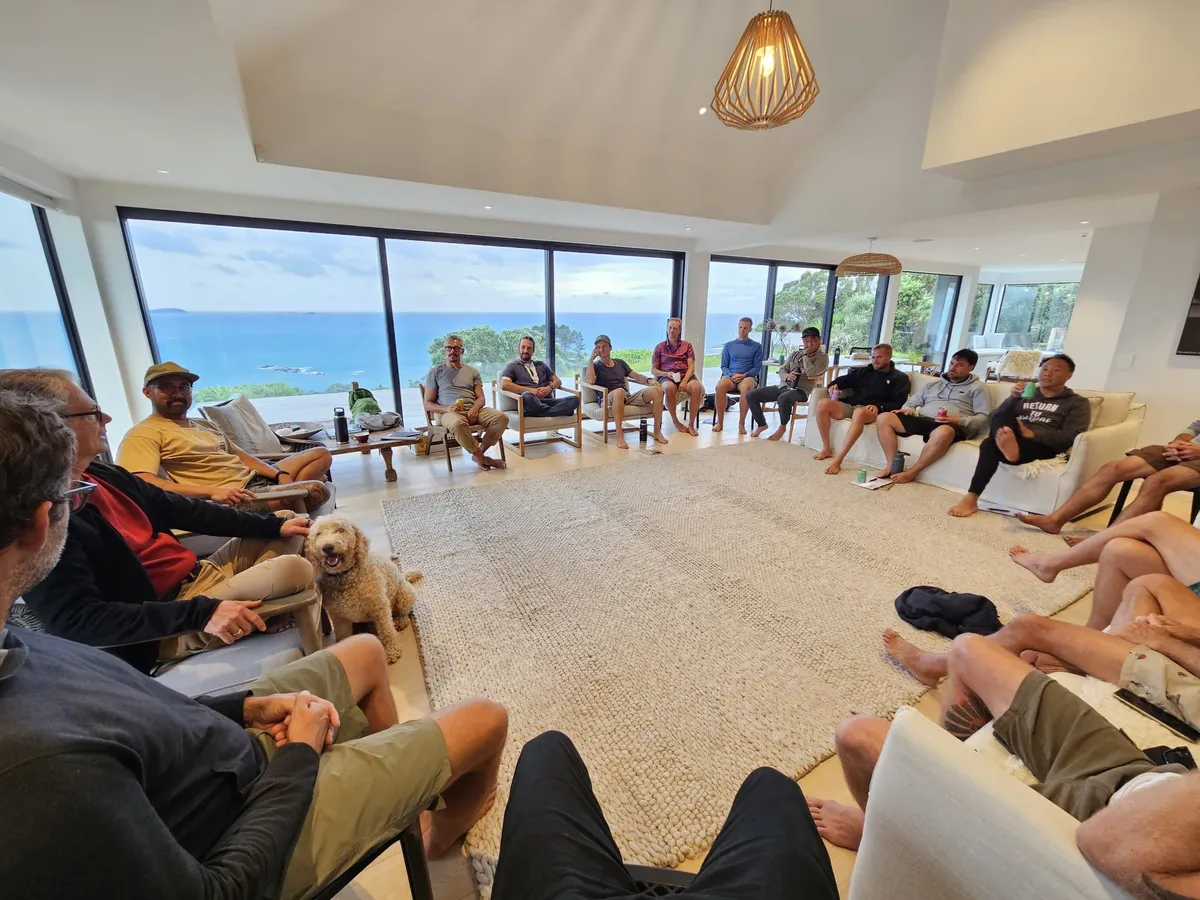
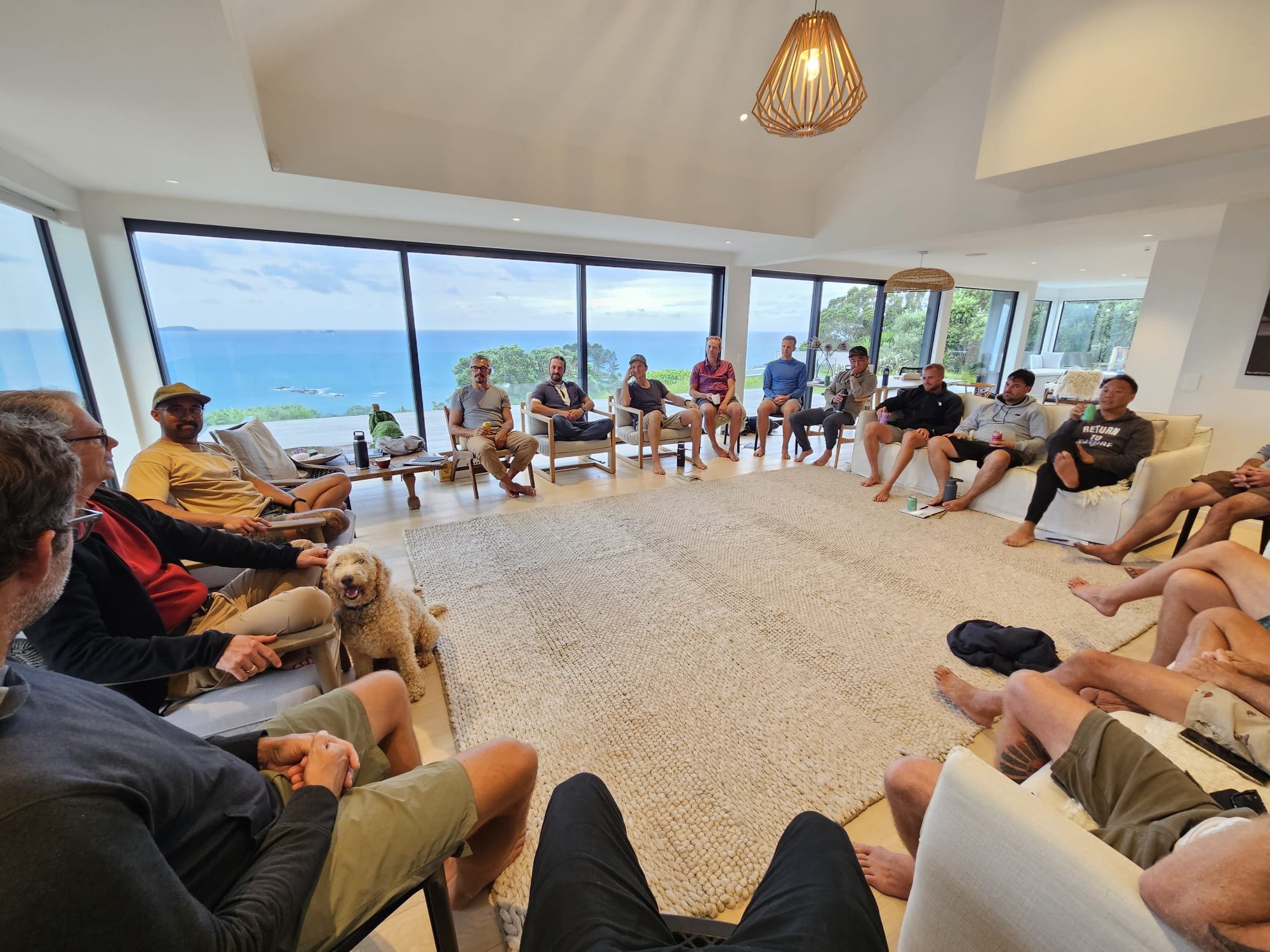
Facilitated men’s circles and group work. Here the centre of the program is conversation. A facilitator holds the space, a small group of men talk honestly, and nobody is pushed to share more than they want to. Some include somatic practice. Somatic means body-based awareness and practice: noticing what stress feels like in your chest, jaw or gut, and learning simple ways to ease it.
Fitness and outdoor programs. Hiking, training and cold-water or sauna sessions, sometimes mixed with talks on weight, energy and habits.
None of these is better in general. A man who has not stopped in two years may need rest first. A man who has plenty of rest but few honest conversations may need a circle.
Why connection is the part many men miss
The Australian Bureau of Statistics reported that around 1.5 million Australian men aged 18 and over (17 per cent) had a self-reported mental or behavioural condition in 2014-15. The same release noted that physical health, financial and family pressures can all affect men’s mental health, and that staying in contact with people matters. This is older data and it covers self-reported conditions, so read it as context, not a current count.
Movember research reported in 2026 found that 67 per cent of Australian men have left or wanted to leave a health practitioner because they did not feel a personal connection. It is a survey finding, and it says nothing about every practitioner. But it points at something many men recognise: how a space feels matters as much as what is on the program.
That is why connection shows up so often in retreat design. Being in a room with other men your age, at a similar stage, can take away the sense of carrying it alone.
How to choose a retreat that fits you
This part is practical advice, not research. Use it as a checklist.
Name what you want. Rest, tools for stress, friendship, direction, or a mix. Write one line. If a program does not speak to it, move on.
Check who runs it. Ask who facilitates, what their background is, and whether practitioners are on hand. Credentials matter most for anything touching health.
Look at group size and style. Ten men in a circle feels different from forty in a lecture room.
Read the inclusions. Accommodation, meals, sessions, transport and any extras. Get the total price in writing before you commit.
Check the pace. A packed schedule can leave you more tired. Look for free time.
Ask about the opt-out. You should be able to skip an activity or sit out a share without explanation.
Ask about afterwards. The few days matter, but what you keep doing at home matters more. Is there a community, a call or a follow-up?
Think about timing. Between family commitments, work peaks and school terms, pick a window you can actually be present for.
What to expect before, during and after
Before. Expect a booking form, some questions about health and dietary needs, and a packing list. Tell the organisers about injuries, medications or anything that affects how you take part. Sort cover for work and home so you are not checking messages.
During. Most days mix sessions with unstructured time. Phones are often set aside for parts of the day. You will meet men from different backgrounds, and many arrive nervous. That is normal.
After. Coming home is the harder bit. Work and family pick up where they left off. Keep one small practice going, and keep one person or group you can talk to.
A simple practice you can try without a retreat
Here is a method we use at COREMEN: NOTICE, STEADY, SPEAK. It is optional, and you can skip it.
NOTICE. Pause once today and ask what your body is doing. Tight shoulders, shallow breath, a clenched jaw. No need to fix anything.
STEADY. Put both feet on the floor. Breathe out slowly, a little longer than you breathe in, for about a minute.
SPEAK. Say one true sentence to someone you trust, such as “I’ve been under a lot of pressure lately.” Or say it to yourself first.
This is a practical suggestion, not a treatment. It will not replace professional care.
When a retreat is not enough
A retreat can be a good step, but some situations need qualified support first. A private hospital’s guidance lists signs that higher-level help may be right: finding it hard to get through the day, big changes in mood, sleep or behaviour, thoughts of self-harm, or using alcohol or other substances to cope. If any of that sounds familiar, talk to your GP.
For immediate danger, call 000 or go to the nearest emergency department. For crisis support, Lifeline is on 13 11 14, 24 hours, per the same guidance.
The government-funded Medicare Mental Health services offer free support, navigation and referral for anyone living in Australia, staffed by professionals including psychologists, social workers and peer workers. They are not designed for long-term ongoing care, so they work best as a way to find the right service.

Where COREMEN fits
COREMEN is community, peer support and non-clinical coaching for men. It is not therapy, counselling or medical treatment. We built it for men who carry a lot, look fine from the outside and feel distant underneath. We all drift. We return.
CORECONNECT™ is our facilitated, in-person retreat, led by Ryan Key. If you want to see what is on offer across COREMEN, start at the COREMEN home page.

If a retreat feels like too big a step, the free weekly men’s call is an easy place to begin: join the weekly men’s call. If you would rather talk to Ryan first, you can book a free conversation.
FAQ
How long is a typical men’s wellness retreat in Australia?
Programs range from two-night stays to week-long escapes. Meditation retreats are often around three nights. Check each program’s page for its exact length and what the price covers.
Do I have to share personal things in front of the group?
In a well-run program, no. You should be able to listen, pass on an activity or share only what you choose. Ask the organisers how they handle this before you book.
Is a men’s retreat the same as therapy?
No. A retreat is a break and a space for connection and practical tools. Therapy and counselling are clinical services delivered by qualified professionals. If you have concerns about your mental health, start with your GP.
What if I am not sure I am ready?
That is common. You can start smaller with a weekly call, a conversation with someone you trust, or a chat with your GP. A retreat will still be there when the timing suits you.
Ready to look at a retreat?
If CORECONNECT sounds like the right kind of space, join the CORECONNECT waitlist. There is no pressure, and you can pass on anything that is not for you.
Coremen
Talk Through Your Retreat Options
Email Ryan to ask about COREMEN’s support programs, including the CORECONNECT retreat and other ways to connect with the community.
CCoremen
